
MAYALLYANG
What?

LOGLINE:
In the shadow of Mount Kanchendzonga, a young Indigenous woman embarks on a journey through memory, myth, and landscape to rediscover her Lepcha roots, transforming ancestral stories into a comic book that reawakens a sacred bond between people and the Earth.
Duration: 10–12 minutes
Language: Róng (Lepcha), with English subtitles
Location: Dzongu Valley, North Sikkim
Format: Hybrid documentary with expressive and observational elements

Mayalmit Lepcha
Mayalmit Lepcha, the main character of our film, is an Cultural Custodian, Community Leader and Environmental activist, from Dzongu, North Sikkim, the protected ancestral land of the Lepcha people. Her name, Mayalmit, means “child of paradise”, a reflection of the Lepcha belief in Mayal Lyang, 'the hidden, sacred land gifted to them by nature.'
Rooted in Lepcha cosmology, Mayalmit’s life bridges ecological preservation with cultural survival. For over a decade, she has led efforts to resist destructive hydropower development on the Teesta River, which holds deep spiritual significance for her people. She has been central to non-violent protests and indigenous rights advocacy, as being part of Affected Citizens of Teesta. Today, she leads community-driven projects that document oral histories, clan myths, and traditional ecological knowledge, reviving endangered practices and language from within.
Through her eco-tourism initiative, Leemoo Lee Homestay, and leadership in local festivals, she promotes sustainable livelihoods rooted in identity. As President of the Sikkim Indigenous Lepcha Tribal Association (SILTA), she also mentors youth and uplifts women’s voices in tribal governance.
"Her work is a living resistance - a child of paradise protecting paradise itself."


WHY?
The River is Speaking, and the World Must Listen


In October 2023, a devastating flood swept through North Sikkim. Triggered by a Glacial Lake Outburst Flood (GLOF), the Teesta III dam burst destroying homes, roads, ecosystems, and lives. For many, it was a disaster. For the Lepcha community, it was a confirmation of long-voiced warnings.
The Lepchas have resisted dams in Dzongu for over a decade not as activists in the modern sense, but as stewards of a land they consider sacred. The Teesta River, to them, is not a resource. It is a living relative a memory keeper, a soul carrier.
Today, their stories are at risk of being forgotten. Language is disappearing. Rituals are vanishing. Children grow up with rivers they are no longer taught to respect.
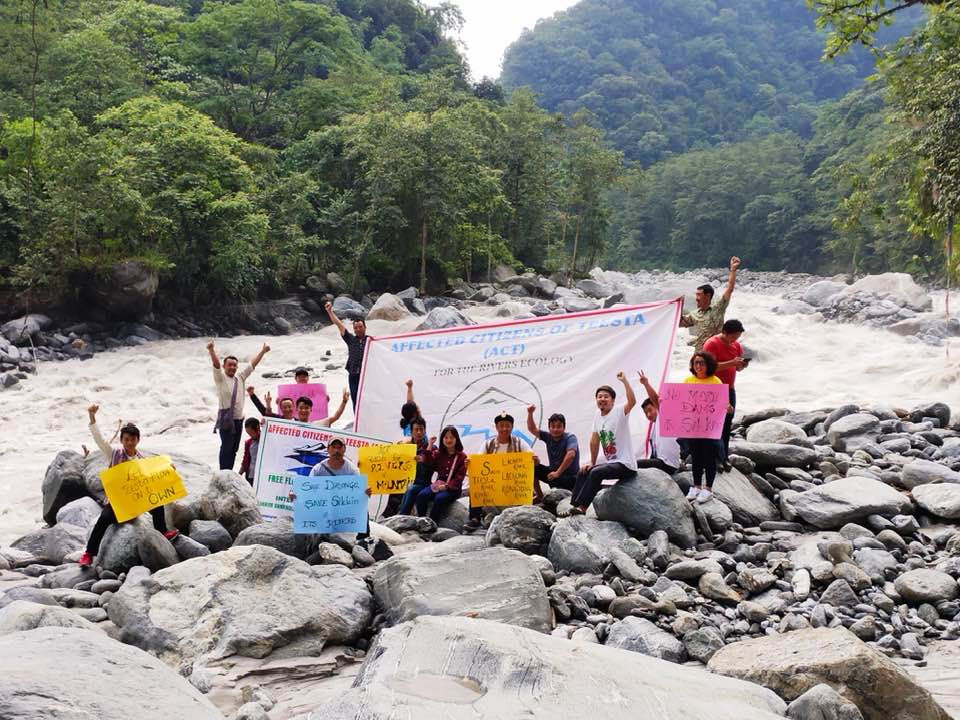
This project matters now because the Lepcha people are already speaking, at conferences, protests, and community gatherings, about the future of Dzongu and the Teesta. Mayal Lyang gives them a vessel to carry that voice farther: to classrooms, to courtrooms, to the world.
In a time of ecological collapse, this story offers not just grief, but continuity, reverence, and a way forward.
It is a call to listen, to remember, and to protect what still lives.

HOW?
We’re creating Mayal Lyang through an ethical filmmaking process, co-developed with the Lepcha community.
This project combines poetic cinema, a hand-drawn comic, and grassroots outreach to preserve memory and support cultural resistance.


The Making and the Meaning
What does it mean to be human in a world unraveling?
Can we still remember how to belong to land, to water, to story?
Mayal Lyang is our attempt to explore these questions, not through argument, but through image, ritual, and memory. The film and comic together become a gentle inquiry into our relationship with nature, told through the worldview of a community that never stopped seeing rivers as relatives, forests as ancestors, and language as a form of care.
This is not just about documenting loss, it is about reclaiming connection.